There are no products in your shopping cart.
| 0 Items | £0.00 |

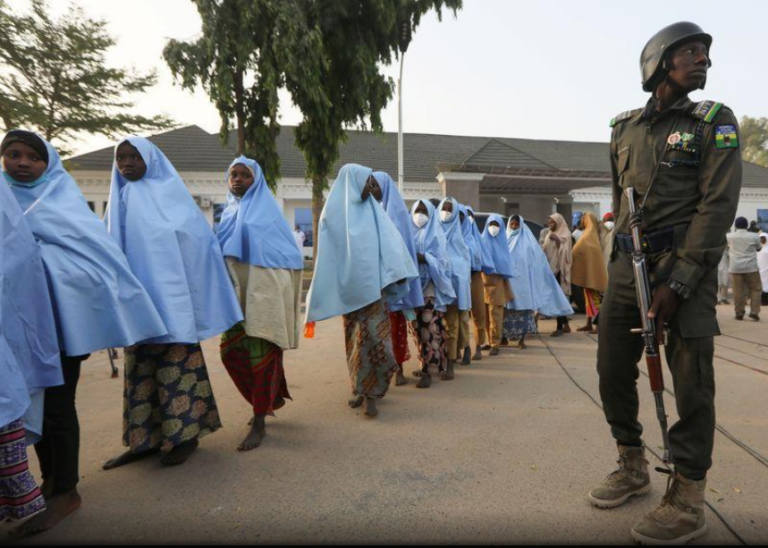
PRESIDENT Bola Tinubu declared a nationwide security emergency ordering the security forces to immediately expand recruitment and deploy thousands of additional personnel in response to the incessant spate of kidnappings over the last few weeks.
Over the last fortnight, there has been a collapse in security across northern Nigeria with 24 pupils kidnapped from Government Girls Comprehensive Secondary School, Maga, Kebbi State on November 17. Then, armed gunmen stormed St Mary’s Catholic School, Papiri, in Niger State, abducting over 300 pupils and 12 teachers and 38 persons were abducted during an attack on Christ Apostolic Church in Eruku in Kwara State.
Highly embarrassing for the government, the matter has attracted international attention, with the US now considering re-designating Nigeria as a Country of Particular Concern (CPC) in response to the crisis. Forced to scrap a planned trip to attend the G20 summit in South Africa as a result, President Tinubu has now asked the army, police and intelligence services to expand recruitment and deploy thousands of more men to deal with the crisis.
President Tinubu also urged the National Assembly to initiate the process of legalising state police to tackle the escalating wave of kidnappings and terrorist attacks across the country. Already, the federal government has ordered the closure of 41 unity schools across the country to forestall any further abductions.
As the debate hearts up, in a rare departure from the usual solidarity with the executive, several Senators and House of Representatives members have criticised the federal government for negotiating with bandits for the release of hostages seized in the Kwara and Kebbi attacks. Lawmakers have demanded a halt to the negotiation with the terrorists and punishment for the official who ordered the withdrawal of troops from the Government Girls Comprehensive Secondary School, Maga in Kebbi State,
However, the presidency had defended resorting to negotiations with the bandits, saying that this was done to ensure the safety of the victims. Presidential spokesman Bayo Onanuga, dismissed speculation that a ransom was paid for the release of the hostages but pointed out that the security agencies decided not to engage the bandits in their hideouts because the victims were being used as human shields.
Mr Onanuga said: “What sometimes restrains them from going after them is the risk of collateral damage. They go about abducting our people and they use them as a shield so they will not be attacked."
However, senators and House of Representatives members did not buy his argument, asserting that the approach may further embolden the criminals and worsen the country’s security crisis. Yesterday, there was a heated exchange during Senate plenary as the lawmakers warned that the nation was under attack and on the brink of losing public confidence.
Deputy senate president, Barau Jibrin, said the escalating violence had made it clear that Nigeria must seek support from abroad. Senate majority leader, Opeyemi Bamidele, described the current wave of attacks as a defining moment for the nation, warning that business as usual could lead to catastrophe.
While welcoming the rescue of abducted victims, Senator Bamidele expressed concern that security agencies offered no information on terrorists neutralised during the operations. He also cautioned colleagues against attention-seeking, referencing earlier calls in the House of Representatives for a shutdown of the National Assembly.
Senator Enyinnaya Abaribe pushed back against attempts to blame previous administrations, insisting the current government must accept responsibility for its failings. He cited reports that troops were withdrawn hours before the Kebbi school attack, saying President Tinubu should be asking for answers.
