There are no products in your shopping cart.
| 0 Items | £0.00 |

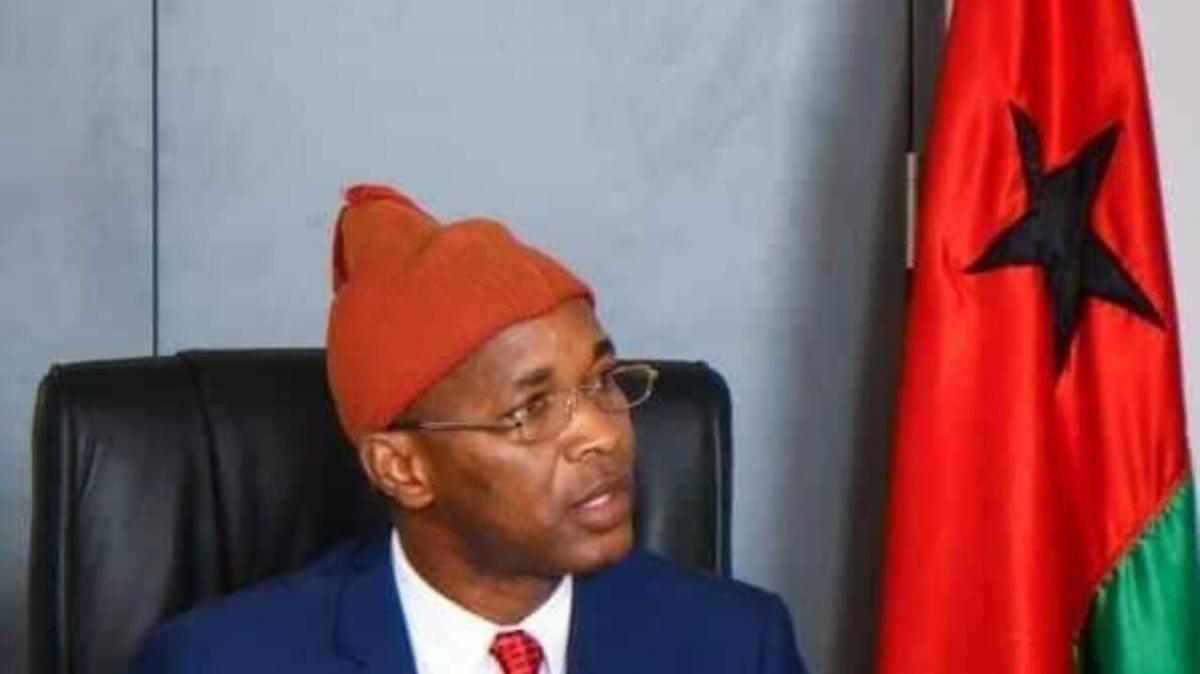
NIGERIA has granted political asylum to Guinea-Bissau's opposition presidential candidate Fernando Dias da Costa granting him and his family the right to stay at the Nigerian embassy as part of its opposition to the military coup d'etat in the country.
Former Nigerian president Dr Goodluck Jonathan had been the head of the Economic Community of West Africa (Ecowas) election monitoring team overseeing the presidential elections in Guinea-Bissau. However, following disputes over who won the polls, the military decided to strike, seizing power and overthrowing the government of President Umaro Embaló.
Amidst the chaos, President Bola Tinubu sent an aircraft to Bissau and it managed to airlift the former president and return him safely to Abuja. Speaking upon his arrival Dr Jonathan urged Ecowas and the African Union (AU) to immediately publish the authentic election results already collated before the military intervention.
Ousted President Embalo has already sought refuge in neighbouring Senegal and now his opponent in the election Mr da Costa, has been granted asylum after alleged threats to his life. With both political leaders now out of the way, Guinea-Bissau's military authorities declared that they have assumed full control of the country.
Nigeria is opposed to the coup, which has sparked renewed debate among political observers across the continent, with analysts warning that recurring coups in West Africa could heighten political tensions and public frustration in the region’s largest democracy. Over recent years, the military has seized power in Mali, Burkina Faso, Niger and Gabon, to the frustration of the Nigerian government.
Regional experts say the trend reflects growing dissatisfaction with governance, corruption, unemployment and weakened state institutions across the continent. Hameed Murtala, a development practitioner and media consultant, said the coup in Guinea-Bissau was sad but was another reminder of the troubling socio-economic problems bedevilling many countries in the region, which governments have failed to tackle.
For Nigeria, where the majority of the citizens are disenchanted and distressed by endemic bad governance, corruption, lack of accountability and inefficiency, perhaps the coup is a stark warning of what weak and insensitive governance can lead to. Observers say the coup in Guinea-Bissau reinforces fears that when institutions are weak and governance is poor, political instability and violence become more likely.
Kingsley Nwanze, the director-general of the Centre for Leadership and Creative Entrepreneurs in Africa, said for Nigeria, the coup translates to a dangerous rise in domestic security risks, fuelling arms proliferation and humanitarian crises across porous borders. Even though Nigeria remains a democracy under civilian leadership, experts say the environment of discontent and socio-economic challenges shares similarities with conditions in countries where coups have occurred in the last few years.
Guinea Bissau’s presidential elections were disputed with both President Embalo and Mr da Costa claiming victory in the polls. So far, official results have not been released and Dr Jonathan has urged Ecowas and the African Union to do this, so everyone knows who the winner was.
