There are no products in your shopping cart.
| 0 Items | £0.00 |

Ayo Akinfe
[1] It may surprise you all to know that this product which is abundantly grown in Nigeria is increasingly being used in sustainable packaging globally. Do you know that in 2025, the global sustainable packaging market was valued at $313.7bn, with the calabash representing a huge chunk of that. Just imagine Nigeria having just 10% of that market
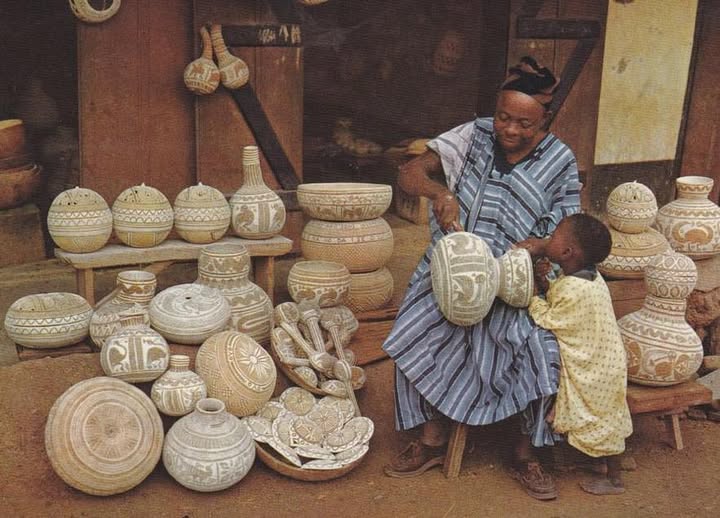
[2] Across West Africa, calabash gourds are used for a wide array of purposes. We hollow them out, using them as household utensils. They are used to clean rice, carry water, cooking utensils and as food containers. Smaller ones are used as bowls to drink palm wine too
[3] In pre-colonial times, calabash gourds were the main means of transporting liquids before we had all these plastic and metal containers. I remember reading my Things Fall Apart and recollecting how central they were to the carrying of palm wine. At traditional weddings in Igbo society, the groom's family was assessed on the size of the gourd of palm wine they brought when coming to ask for the bride's hand
[4] In our entertainment industry too, the dried gourd in used in making the West African kora, or a harp-lute and the goje a traditional fiddle. Why are these gourds not used to mass produce guitars and musical instruments globally today?
[5] Of recent, our people have found another use for them, which is using gourds to make motorcycle helmets. I believe this could be an area we exploit and seek to establish a global industry. With the current clampdown on the use of plastic and the move towards organic products, we should be looking to build the world's largest gourd processing factories
[6] I tried to check Nigerian calabash gourd production figures but alas, we do not keep records of our output. As is the case with many things we produce, we keep no data, have no board managing production and there is no strategy to exploit the global opportunities many of these products offer
[7] Areas where a gourd processing factory could carve a niche include the production of military headwear, motorcycle helmets, cycling head gear and probably as fashion accessories too. Just imagine some of the women going to Ascot in the UK wearing special hats made out of calabash gourds
[8] According to data out there, China is the world's largest bottle gourd producer, followed by India and then Pakistan, with South Africa and Bangladesh also among the top five. To be perfectly honest, I would be surprised if any of these nations produced more than us. If we kept data, we would probably be the world's number one producer
[9] By now, Nigeria should have taken production to new levels. Calabash gourds have the advantage of being light, so unlike metal or reinforced plastic, you could add armour to them without the end product becoming too heavy
[10] Can someone please explain to me why when you step into Walmart, Asda, Sainsburys, Tesco, etc across the West, you are not confronted with Made in Nigeria calabsh cups of exotic design? They are cheaper than ceramic, would cost less to produce and could easily be mass produced. They also give you more versatility with regards what you can do with them
