There are no products in your shopping cart.
| 0 Items | £0.00 |

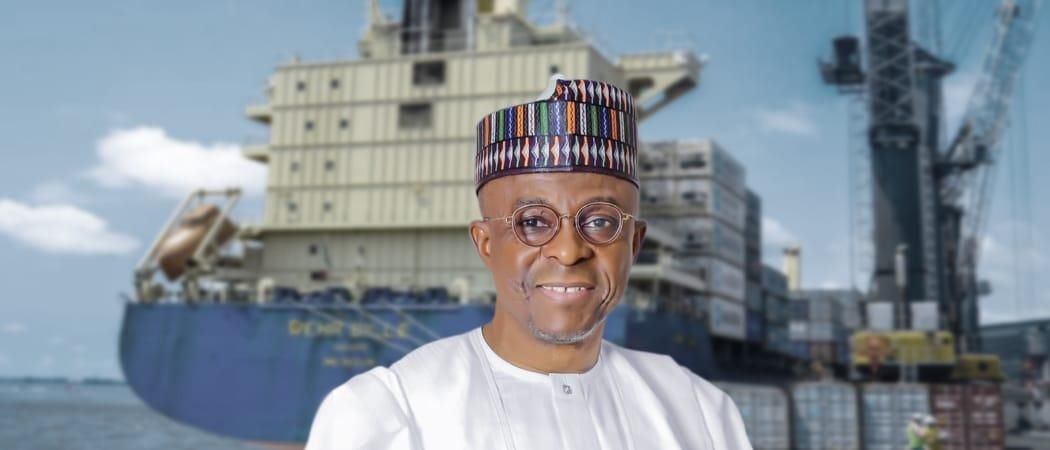
NIGERIAN Ports Authority (NPA) managing director Abubakar Dantsoho has warned that the country needs to invest in new deep seaport and cargo handling capacity as the existing facilities are struggling to keep up with the pace of economic development.
Despite having an extensive Atlantic coastline of 853km, Nigeria only has two sea ports which handle in excess of 2m twenty-foot equivalent units (Teu) of cargo annually. Apapa and the recently-commissioned Lekki Deep Sea Port, both in Lagos State are operating at full capacity, while the lesser ports in Warri, Port Harcourt and Calabar remain under-utilised because they require substantial investment in the form of dredging.
Speaking at a maritime meeting in London this week, Mr Dantsoho warned that the exhaustion of the Lekki Deep Sea Port’s capacity barely three years after its commissioning underscores the urgent need for additional maritime infrastructure in Nigeria. He identified Nigeria’s growing population, rapid urbanisation and infrastructure deficits as major factors driving demand for new port facilities and associated maritime services.
According to Mr Dantsoho, Africa’s largely untapped maritime potential offers investors considerable opportunities for long-term returns. Lekki is designed to handle 2.5m TEUs annually, while the Apapa and Tin Can Island ports have a combined capacity of about 2m and to keep pace with the growing demand, Nigeria needs to invest in other ports along its coastline.
Mr Dantsoho said: “The investment needed in ports to meet this expansion and growth can only happen if the requisite private investment is attracted and retained, which is what President Tinubu has created the enabling atmosphere for. In Nigeria, we identified that infrastructure gap, especially in our ports’ development and we realised that we must do something quickly."
He added that development presents significant investment opportunities for international investors, particularly as the administration of President Tinubu continues to position the maritime sector as an attractive destination for private capital. At the moment, there are plans to invest in the Ibo Deep Sea Port in Akwa Ibom State under a plan that will see investor Bollore Consortium, operating the port for 50 years under an arrangement whereby it owns 60% of the facility and the state government the remaining 40%.
