There are no products in your shopping cart.
| 0 Items | £0.00 |

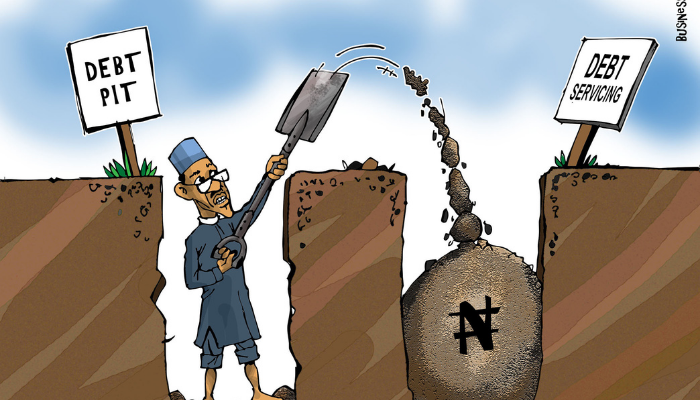
NIGERIA'S total external debt has quadrupled over the last seven years ballooning to $40.06bn as of at June 30, 2022 from a mere $10.32bn on June 30, 2015 as government borrowing grew in the wake of the pandemic-induced economic meltdown.
Back in 2020, Nigeria had to borrow about $11bn from bodies such as the World Bank, International Monetary Fund (IMF) and the African Development Bank to fund its $28bn budget. With there being no hope of a recovery in global crude oil demand, at the time, Nigeria had no choice but to resort to more borrowing in 2021 as she is a mono-economy wholly dependent on one commodity.
Nigeria's budget is predicated on the federal government selling 2.1m barrels of crude oil and with output currently below 1m barrels a day, borrowing has been increased to fund the budget deficit. With over 90% of federal government revenue coming from crude oil receipts, Nigeria has no option than to borrow to fund spending.
According to statistics just released by the by the Debt Management Office in its external debt stock reports, Nigerian borrowing grew by 288.18% over the last seven years. A breakdown shows that in 2015, 36 states had $3.27bn external debt while the federal government owed total debts of $7.05bn.
By 2022, states’ external debt rose to $4.56bn, while the federal government’s external debt increased to $35.5bn. These debts included loans from multilateral sources and bilateral loans from China, France, Japan, Germany and India, as well as commercial sources including Eurobonds and diaspora bonds.
Nigeria’s external debt ballooned as the naira lost value, increasing the country's debt service burden and worsening its ability to service debt. Recently, the International Monetary Fund said that the long-term rate of the depreciation of the naira equated to a loss of 10.6% of its value annually since 1973.
According to the IMF, this rate was 1.5 times higher than the long-term rate of the currencies of other emerging markets and developing economies at 7.2% and sub-Saharan Africa at 7% over the same time period. Also, the Bank of America recently said Nigeria’s local currency, the naira, was set to weaken further next year as its current exchange rate to the dollar was well above fair value.
Johnson Chukwu, the chief executive of Cowry Asset Management, said: “This will impose a huge debt service on the economy, particularly at a period when we have low revenue from oil sales. If the revenue from oil sales does not improve, then the government will be struggling to meet that debt service obligation to foreign lenders.”
However, he noted that Nigeria could service its foreign debt at the current level but a constant increase in debt without a corresponding increase in foreign currency earnings could put the country in a difficult position. It is not yet clear where any increase in foreign exchange earnings will come from.
